
Kung Fu fans dream of MMA representation, but will it ever happen?
The played out cliché is that the early UFC tournaments demonstrated that BJJ was the most effective martial art in style vs style competition. That cliché is obviously not true, Royce Gracie was one of two grapplers in that first tournament, the other being Ken Shamrock who while being a grappler had far less submission experience than Royce.
The first UFC featured no judokas or sambists – who would not have been confused by their sister art. What we learned from the first UFC, is that if your opponent can clinch you, you can be taken down – and that if you’re in striking range, you are in clinching range.
As a result we saw several popular striking arts, American kenpo, taekwondo, boxing and savate be bested in the long run. The second tournament saw another Royce victory, with Frank Hamaker sustaining an injury leaving him unable to compete past the first round. Royce once again didn’t have to face a grappler.
UFC 2 also saw the tournament debut of Jason DeLucia in early Western MMA. DeLucia fought as an alternate in UFC 1 but was never required to actually step in. He was in fact, the first fighter to ever win in the UFC, and he did it with a submission.
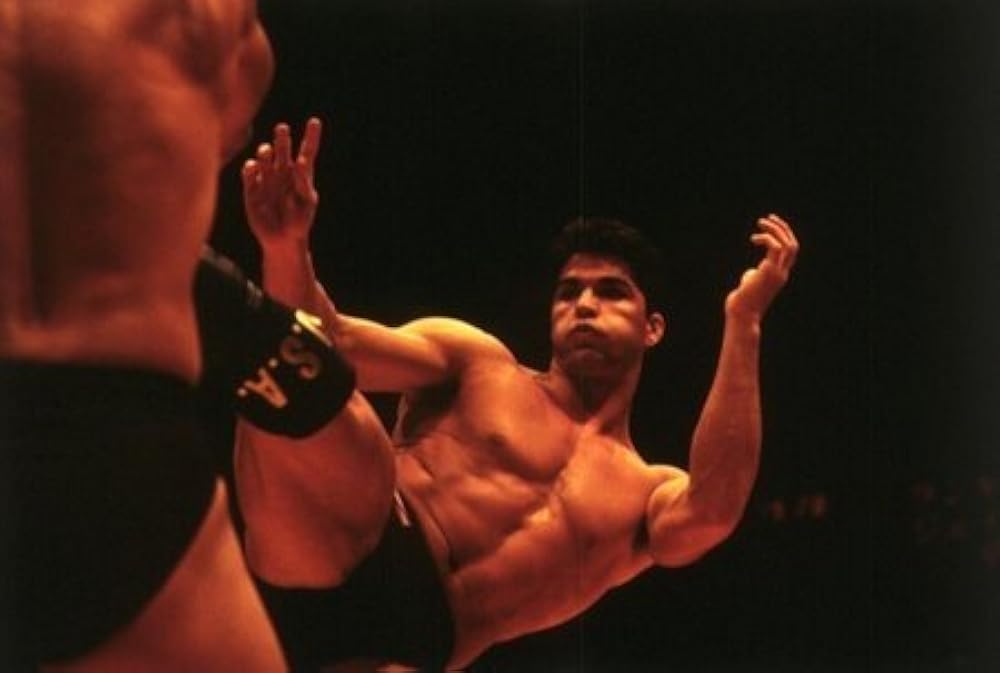
So why am I bringing up Jason DeLucia? In spite of DeLucia being even for the time quite a well rounded martial artist, studying in multiple styles – in UFC 2 he stated that he was representing Shaolin Quan. I think it’s fair to say that DeLucia wasn’t a shining example of Shaolin Kung Fu in MMA, not that he didn’t have a great career, but DeLucia’s style was so varied and he was so complete for his time – that it’s hard to really see much Kung Fu in there.
Since those early UFC tournaments, the meme has been that the old tournaments proved Kung Fu didn’t work. Is there truth to this? And why haven’t we seen much Kung Fu in MMA?
What Actually Is Kung Fu?
In order to address this conundrum we need to figure out what we are talking about. As Kung Fu, or Gong Fu at its also known is an umbrella term meaning martial arts. If we are considering Kung Fu to be Chinese Martial Arts, then not only has Kung Fu worked, but we’ve even had a kung fu fighting UFC Champion. Weili Zhang, Cung Le, along with the Russian fighters Muslim Salikhov and Zabit Magomedsharipov all practise Sanda. The Chinese kickboxing style that focuses on the combination of kickboxing and wrestling.
Muslim Salikhov is the most accomplished of the bunch. He won the King of Kung Fu title, and proved himself the best sanda fighter in his weight class.
There is also the incredibly old Kung Fu style, Shuai Jaio a style of jacket wrestling reminiscent of Mongolian wrestling and judo.
Shuai Jaio may well be the oldest style of Kung Fu, with folk wrestling traditions dating back hundreds to thousands of years.
However…
I think we’ll probably all agree that when we’re referring to Kung Fu, we’re not usually referring to these more practical styles. We’re referring to something more like this:
Tai Chi is probably the most famous of all the taolu based Kung Fu styles. This is without a doubt a beautiful expression of martial arts in a performance setting, but we’ve never seen a fighter step into the cage and have success moving like this. Is it that the martial arts themselves don’t work?
The answer to this is obviously complicated. Yes and no. While some hardcore UFC fanboys would probably try to make the argument that Kung Fu doesn’t work, there are two things to consider. First is that absence of evidence, is not evidence of absence. The second is that a martial art ‘working’ – is relative to its purpose.
A kung fu expert might not necessarily win in a fight vs a Thai boxer who is used to facing trained opponents, but they may well be safe in a self defence scenario. While the idea that Kung Fu is good for self defence because it is ‘without rules’ is a laughable myth, it’s true that training in Kung Fu will still give you proprioception and confidence that could lead to you winning a fight on the street.
The big issue surrounding Kung Fu is the over emphasis in forms, which have you performing choreographed ‘dance’ routines, as opposed to actually practising fighting. Which means we’ll now have to unpack…
Kata and what it’s for
I apologise to all the Kung Fu purists I have upset by referring to forms as Kata. Kung Fu, and Karate (itself an off shoot of White Crane Kung Fu) place a lot of emphasis on learning forms and kata. These are often discredited as ‘useless’, which is semi-correct.
Just a reminder that I also discussed these ideas with Gabriel Varga, in our interview here.
The purpose of forms is to act as a library of martial arts concepts that you can practise. Forms are how techniques and principles were indexed and passed down in ye olden times. In order for that form to be made useful, you need to understand the application.
Here is a great example:
While that movement in form may look like movement for performances sake, when seeing the application of the move – it starts to make sense. This essential aspect of training unfortunately seems to be lacking in a lot of Kung Fu. Meaning the forms become more about performance as a means of expression. This is not a problem as performance is a valid aspect of martial arts, it does however mean most styles of Kung Fu don’t tend to be ready for full contact competition.
There is a final factor in whether or not kung fu ‘works’ and this factor may be why we’ll likely never see any fighter look like a kung fu star in the UFC.
The Image of Kung Fu, and Over Commitment
When we think of a boxing as a martial art, we think of the competition, or Rocky movies if you’re a man of culture. When we think of Karate, we think of the karate class everyone took when they were six when we think of Kung Fu, we think of Kung Fu movies.
Hong Kong Cinema was built on the kung fu action movie and featured extraordinary performers like Bruce Lee, Jackie Chan, Sammo Hung and more. Even our very own gym owner, Cliff Bura, is no stranger to using his martial arts skills for the movies. Choreographed fight scenes allow for a very pure expression of what martial artists want Kung Fu to be. It can be as big and bombastic as you need it and it means we get to see superhuman feats of violence. One man slapping away 20 peoples punches while perfectly side kicking them in the gut.
In short, our image of Kung Fu, is impossible. In order for a martial art to be successful in MMA and kickboxing, it needs to be subtle, minimalist. Every movement needs to be precise, considered and most importantly, hard to see coming. There isn’t much minimalistic about this:
It’s fantastic and I wish I could do it. Unfortunately, I’m a mere mortal, and so is every kung fu practitioner. So what does Kung Fu look like when it’s pressure tested through sparring and has to become pragmatic and minimalist?
Well if the Beijing Bajiquan Club, a school that takes their kung fu training very seriously, it honestly just starts to look like kickboxing.
We see backfists and forearm strikes in there, which are occasionally used in MMA, but for the most part we don’t see anything that you don’t already see in a Muay Thai or Sanda class. These two practitioners are using Kung Fu, and yes they are demonstrating that bajiquan as a style does work when trained with proper sparring – but I think they also show that ultimately learning to kickbox is the most efficient way to strike.
It’s not just Kung Fu, all striking styles when at their most practical start to look the same. Muay Thai while visually quite unique, still isn’t miles away from kickboxing in terms of its appearance. An expert will be able to tell the difference between a savate fighter and a sanda fighter from subtleties in the way they stand and the way they create a kick – but to the layman, it’s all going to look much of the same.
Similarly, styles of Kung Fu that favour punches over kicks, like Hung Gar and Wing Chun, really teach the same principles as boxing and Muay Thai.
Alan Orr has spent years pushing Wing Chun as a reliable martial art, with pressure testing and sparring galore and the end result appears to be the exact same things you will learn in any boxing class.
So, will it ever work in the UFC?
I think there are two places we can go with this question. If the glass is half full, we can say that it does work right now. We have had a sanda champion and numerous fighters. Sanda is the combat sport version of kung fu that takes the traditional wrestling of China, and the strikes of various kung fu styles and merges them together in what is quite possibly the strongest striking style in the world. If you view this as kung fu, in spite of it not having the traditional look of Kung Fu, then Kung Fu works.
If Sanda doesn’t fit your definition of Kung Fu, and the glass is half empty, I’d say no. If Kung Fu has to look like how it does in demonstrations, then we will never see Kung Fu at the top levels of combat sports. Maybe this is okay though. A martial arts validity doesn’t come simply from its practicality in combat sports against other trained opponents. Kung Fu can still work for self defence and expression.
Training Kung Fu for the love of the culture and traditions, and kung fu for kung fu’s sake is perfectly valid. There are great benefits to Kung Fu in terms of strength and conditioning, flexibility and balance that can help you build a fitter body at any age. If that is enough for you – then Kung Fu’s place in the UFC shouldn’t matter.